
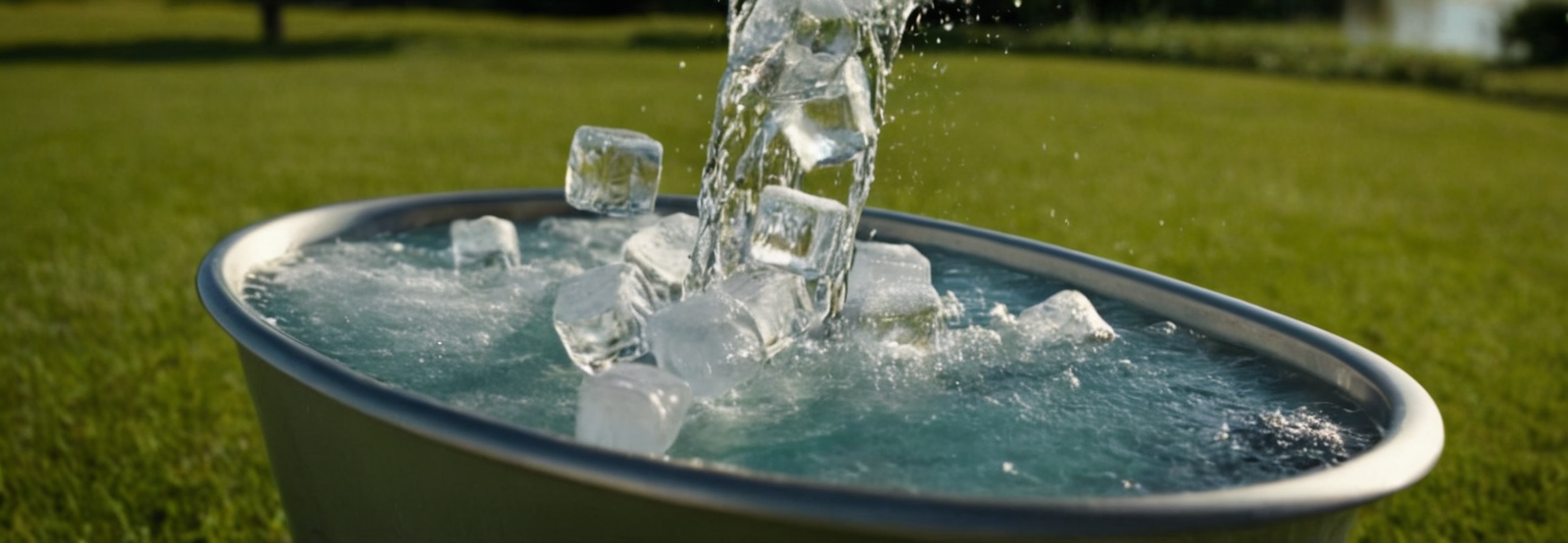
You’ve probably felt it – a cold shower after a long day, a brisk winter walk, or the buzz after stepping out of an ice bath. Cold exposure is trendy, but it also has a real research story behind it – some strong signals, some big unknowns, and a few clear safety rules. In this article I’ll walk you through what the research says about cold exposure today, what benefits are present, and how to try it with common-sense safety. I’ll keep it practical and personal – you’ll get evidence, not hype, and a small, safe plan if you decide to test it yourself.
What I mean by “cold exposure“
Cold exposure covers several different practices you might see in wellness circles:
- short cold showers for 30–120 seconds,
- cold-water immersion or ice baths in water 7–15°C for from 30 seconds up to a few minutes,
- cold plunges in lakes or sea,
- cryotherapy which is a brief exposure to very cold, dry air at specialized facilities.
Each of those is different when it comes to intensity, duration, and risk. The evidence varies by method so it helps to separate them when we talk about what works and what’s still uncertain.
The strongest, evidence-backed effects
Short-term physiological stress response
Plunging into cold triggers a predictable set of strong responses – a spike in heart rate, a release of adrenaline and norepinephrine, increased breathing, and a short-term inflammatory signal. These are consistent findings across experimental studies of cold-water immersion and cryotherapy. In other words, cold reliably activates your autonomic nervous system.1
This matters because those stress signals are how cold can produce downstream effects – from alertness to metabolic shifts.
A measurable effect on brown adipose tissue and metabolism
One mechanism often cited is activation of brown adipose tissue (a.k.a. BAT), the “heat generator” fat that burns calories to produce warmth. Trials on humans and systematic reviews show that acute cold can activate BAT and increase energy spendings, but effects on blood glucose, insulin, and lipids in controlled trials are small or inconsistent. In other words, cold can switch on BAT. That does not mean it will meaningfully change your long-term weight or metabolic health on its own.2
Mental wellbeing and stress reduction
A comprehensive review and analysis of cold-water immersion found mixed results but detected reductions in perceived stress and improvements in sleep quality and certain wellbeing measures when evaluated over time. The effects actually are time dependent – immediately after exposure you often see a strong increase in pro-inflammatory markers and stress hormones, while benefits such as reduced stress or improved sleep quality can show up later (for example 12 hours after a cold plunge). Overall, results are promising but the evidence base still needs larger randomized trials.
Fewer sick-days in one randomized trial of routine cold showers
A large randomized trial in the Netherlands randomized adults to a daily hot-to-cold shower protocol of varying durations or control. The cold-shower groups reported a 29% reduction in sickness absences from work over the study period, although there was no reduction in total self-reported illness days. That suggests cold showers might influence functional resilience – getting you to work when you might otherwise stay home – even if they don’t change how often you feel ill. This is one of the most robust clinical trials in the field.3
What the evidence is weaker or mixed on
Recovery and exercise adaptations
Cold after exercise can reduce perceived soreness and speed short-term recovery of performance. That can be useful when you need to bounce back quickly between sessions. However, regular post-workout cold immersion can blunt long-term muscle hypertrophy and strength gains in resistance training programs. If your goal is maximal adaptation from strength training, routine cold immersion immediately after sessions might be counterproductive.
Long-term immune boosting claims
There is plausible biology and some real-world reports suggesting repeated cold exposure modifies immune markers. But robust, reproducible evidence that cold exposure will boost your immune system in a way that prevents infections is limited. The best RCT (the Dutch cold-shower trial) found reduced sickness absence but not fewer illness days, which is an interesting outcome but not definitive proof of broad immune enhancement.
Whole-body cryotherapy (WBC)
WBC is popular in clinics and recovery centers. Reviews find mixed results and many small, low-quality trials. There are signals of benefit for pain relief, sleep, and some mental health symptoms in limited contexts, but the quality of evidence is still low and safety and standardization vary between providers. WBC should not be assumed harmless – there are specific contraindications.4
Safety – what you must not ignore
Cold exposure is not free of risk. Key cautions are:
Cardiovascular risk
Abrupt cold causes increases in heart rate and blood pressure. People with coronary disease, uncontrolled hypertension, or certain heart conditions should avoid intense cold plunges or consult a physician first.
Hypothermia and cold-water drowning
Prolonged immersion or immersion in very cold water can be dangerous. Know the temperature and your time limits.
Rare but serious adverse events
There are reported incidents associated with unsupervised ice-water immersions. Whole-body cryotherapy also has contraindications and safety risks when protocols are not followed.5
If you have any cardiovascular disease, epilepsy, Raynaud’s phenomenon, severe asthma, or are pregnant, check with a clinician before trying cold plunges or WBC.
How cold exposure might help you – practical takeaways
Cold-water immersion has been extensively researched and used in sporting contexts to help athletes recover, but despite its growing popularity among health and wellbeing circles, little is known about its effects on the general population.
Tara Cain 6
If you want to experiment, think of cold exposure as a mild, controlled stressor with three realistic outcomes – immediate alertness, a stress-modulating signal that can promote resilience over time, and a small metabolic activation.
Here’s a simple progression you can try, emphasizing safety:
- Start with the shower. Finish your warm shower with 30–60 seconds of cold water. Repeat on most days for a month and note changes in sleep, mood, or sickness absence,
- Move to plunges only if you’re comfortable. a supervised 1–3 minute cold plunge or lake dip in ~10–15°C water, once or twice weekly. Keep sessions short. Never do ice immersion alone,
- Avoid routine cold after heavy resistance training. Especially if your main goal is hypertrophy or maximal strength development. Use cold when you need recovery between competitions, not as the default after every session,
- Don’t rely on cryotherapy as a cure-all. If you try WBC, choose reputable providers, confirm protocols and contraindications, and consult your doctor if you have health risks.
My experience and suggestions
I started with 30 seconds of cold at the end of my shower. After a week I noticed sharper alertness in the mornings. After a month I slept a little deeper on some nights. I wasn’t convinced it changed my fitness or weight, and I avoided cold after heavy strength workouts. Your case will vary, but those are the effects most consistent with the research.
If you try it, keep a simple log for 4–6 weeks – note sleep quality, perceived stress, energy, and any days you missed work because of illness.
Final notes
Cold exposure is not magic, but it is a controllable method with reproducible physiological effects. For many people it delivers immediate alertness and noticeable, modest improvement in perceived stress and resilience. It shows quite strong promise for wellbeing and recovery, but obviously it is not a replacement for sleep, exercise, or medical care. Start small, safe, and track what matters to you.
Sources
- PLOS, “Effects of cold-water immersion on health and wellbeing: A systematic review and meta-analysis” ↩︎
- MDPI, “Metabolic Effects of Brown Adipose Tissue Activity Due to Cold Exposure in Humans: A Systematic Review and Meta-Analysis of RCTs and Non-RCTs” ↩︎
- Pubmed, “The Effect of Cold Showering on Health and Work: A Randomized Controlled Trial” ↩︎
- ScienceDirect, “A systematic review and meta-analysis of the effect of whole body cryotherapy on mental health problems” ↩︎
- PMC, “Contraindications to Whole-Body Cryostimulation (WBC). A position paper from the WBC Working Group of the International Institute of Refrigeration and the multidisciplinary expert panel” ↩︎
- ScienceDaily, “The big chill: Is cold-water immersion good for our health?” ↩︎