
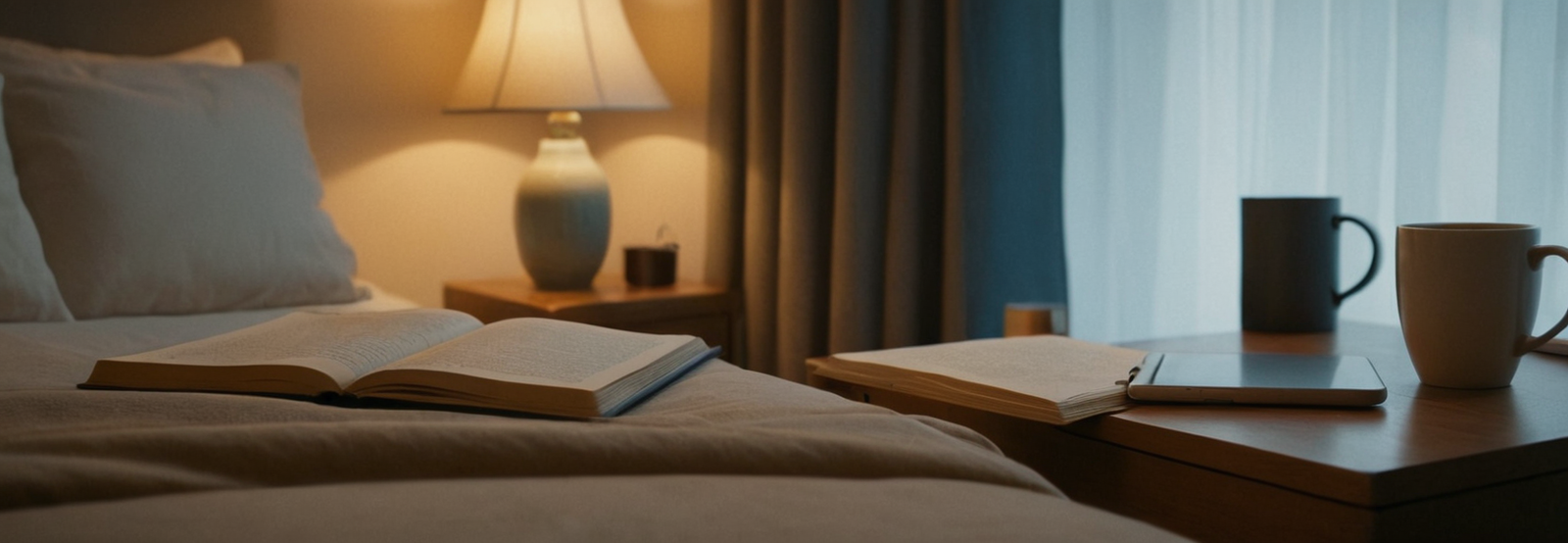
You finish your work, put your devices down, and mean to relax – then an hour later you’re doomscrolling. I’ve been there. Over years of juggling late meetings, travel, and trying different wellbeing experiments, I discovered that the last 60–90 minutes before bed shape the way you sleep and the way you wake. This article walks you through practical, science-backed evening rituals you can test tonight. I’ll keep things personal and practical – try one change at a time, treat it like an experiment, and keep what helps.
Importance of the evening ritual
Think of your evening routine as a signal to your body – lights dim, devices quiet, breathing slows, and your brain begins to shift from “do” mode to “restore” mode. That shift isn’t imaginary – sleep problems are widespread. Recent estimates put global insomnia prevalence at roughly 16% across adults, with many more experiencing occasional sleep symptoms. Sleep problems in the general adult population range from roughly 10% to 30% depending on definitions, and bedtime media use is extremely common – surveys and studies show a majority of adults engage with screens in bed. These patterns matter because evening behaviors influence melatonin timing, sleep latency, and sleep quality.1 2
A practical takeaway – improving how you end the day is often easier and more effective than fighting for one extra hour in the morning.
The core elements of a calming wind-down
There are five reliable building blocks you can combine and adapt to your life. You don’t need all five. Start with one and add another after a week.
A gentle, tested 60–minute routine you can try tonight
Below is a single routine I use when travel or deadlines make sleep harder. It’s compact and repeatable.
60 minutes before bed
Stop heavy work. Switch to low-stakes activities.
50 minutes
Dim lights, set phone to Do Not Disturb and place it out of arm’s reach.
45 minutes
Warm shower or light stretching.
35 minutes
Write 3 things to finish tomorrow (short checklist) and 1 thing you’re grateful for.
25 minutes
10–15 minutes breathing practice (box breathing or 4-7-8).
10 minutes
Read a physical book or listen to a short, calm podcast.
This sequence reduces cognitive load and light exposure while giving your nervous system time to downshift.
What the evidence says – simple, important facts
Screen and media use around bedtime is strongly associated with poorer sleep. Recent studies show that nightly pre-bed screen use increases the prevalence of poor sleep and delays sleep timing. If your bed is a media playground, one of the most effective experiments is simply moving the phone across the room.5
Blue light matters. Multiple lab and field studies show that evening exposure to short-wavelength light suppresses melatonin and shifts circadian timing, reducing that exposure in the hour or two before bed helps sleep onset for many people. You can reduce exposure with dimming, hardware settings (night shift), or by lowering screen melanopic output.
Exercise helps sleep overall, but timing and intensity matter. Regular moderate activity improves sleep quality, while very intense late-night workouts may interfere for some people. If you train hard, try to finish vigorous sessions at least 2–3 hours before bed.
Your personal experiment plan (two weeks)
Treat change like data. Run a two-week experiment and collect simple metrics – bedtime, lights-out time, minutes to fall asleep, and a subjective “sleep quality” rating (1–5). Here’s how to structure it –
Week 1 – Baseline – track your current habits without changing anything.
Week 2 – Intervention – pick one change (consistent bedtime or phone out of the bedroom). Track the same metrics.
At the end of two weeks compare averages. A modest improvement (faster sleep onset, higher subjective quality) means keep it. If not, try a second intervention.
Common obstacles and how to handle them
- “I work late.” – If late work is unavoidable, create a 15-minute buffer between work and bed where you do something unrelated to screens or deadlines. That short reset reduces carry-over cognitive load.
- “I need my phone for alarm.” – Use the phone as an alarm but place it on a shelf across the room, set an earlier alarm to place it on airplane/do-not-disturb, then return to bed.
- “I can’t stop thinking.” – Try an external brain tactic – a 5-minute brain dump into a notebook, then write one small next-step for each worry. This converts chaos and overthinking into action plans and signals completion to your mind.
- “I travel a lot.” – Keep an “anchor ritual” you can do anywhere – a 5-minute breathing practice, a two-song playlist that signals wind-down, or a lightweight body-scan.
Why you’ll notice benefits beyond sleep
A consistent evening ritual doesn’t just improve your sleep. It also enhances your next-day focus by ensuring you start with better-rested attention, lowers evening stress and reduces emotional reactivity, and supports digestion and heart rate regulation by easing the autonomic transition to rest. Emerging research even suggests that maintaining consistent bedtimes may slightly improve blood-pressure regulation, with small trials indicating potential reductions in daytime blood pressure, though this area is still being explored.6
Small changes you might try tonight
- Put your phone outside the bedroom.
- Set a realistic bedtime and stick to it for three nights.
- Reduce lighting 60 minutes before bed.
- Do a 10-minute breathing exercise.
- Write a two-line “done” list to release unfinished tasks.
Don’t combine them all at once. Start small and see what works for you best.
A note about screen settings and tech hacks
Built-in night modes and blue-light filters help some users, but they don’t eliminate all melanopic stimulation. The most robust option is limiting screen exposure in the last hour. If you must read on a device, use dedicated e-ink or a low brightness mode where possible. You can also use do-not-disturb schedules and app timers to reduce friction.
How to measure success without gadgets
You don’t need wearables to track your progress – a simple nightly journal works just as well. Record your lights-out time, estimate how long it takes you to fall asleep, count any wake-ups during the night, and give yourself a morning refresh score from 1 to 5. After two weeks, review the trends – faster sleep onset, fewer awakenings, and higher morning refresh scores are clear signs of improvement.
When you should seek professional help
If you consistently have trouble falling asleep for months, wake often or feel exhausted during the day even despite good sleep habits I strongly suggest to consult a doctor. Don’t wait. Insomnia disorder and other sleep disorders require professional treatment. Use habits as a everyday strategy, but don’t delay reaching out when serious symptoms persist.
Make this your ritual, not someone else’s
Rituals work when they’re personal. You’ll find what fits after a few experiments. Keep the wins small and repeatable. If you travel often, create a micro-ritual you can do anywhere. If your life is variable, focus on a consistent cue – always brush teeth at the same time, always do a two-song playlist before lights are out – and build from there.
Sleep is a superpower for attention, mood, and learning. Evening rituals are the low-effort, high-return way to preserve that power. Try one change tonight and treat it like a data point.
Sources
- Sciencedirect, “Estimation of the global prevalence and burden of insomnia: a systematic literature review-based analysis” ↩︎
- Wiley, “The Prevalence of Insomnia Disorder in the General Population: A Meta-Analysis” ↩︎
- Elle, “Sleep Better Tonight: The Expert-Recommended Gadgets That Actually Work” ↩︎
- Harvard, “Blue light has a dark side” ↩︎
- PMC, “Electronic Screen Use and Sleep Duration and Timing in Adults” ↩︎
- Nypost, “Simple tweak to your daily routine could lower high blood pressure” ↩︎